

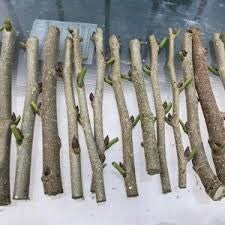
Red Mulberry Tree Cuttings (10)
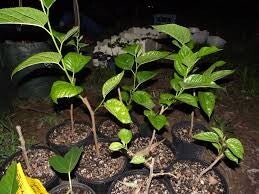
The Red Mulberry (Morus rubra) is the only mulberry species native to eastern and central North America. It is a medium-sized deciduous tree prized for its edible fruit.
Here is a description of its key characteristics:
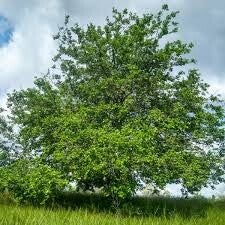
Size and Form Height: Typically grows between 35 to 50 feet tall, sometimes reaching 70 feet.
Canopy: Has a stout trunk and a broad, rounded, dense crown.3Lifespan: Can live up to 125 years.
Leaves Arrangement: Alternate, simple, and large (7–18 cm long).
Shape: They are generally oval to heart-shaped with a pointed tip, but are highly variable. It is common to find unlobed leaves, "mitten-shaped" leaves (one lobe), and three-lobed leaves all on the same tree, especially on younger growth.
Texture: A key identifying feature is the texture: the upper surface is rough (scabrous), like fine sandpaper, while the underside is soft and hairy (pubescent).
Sap: Like all mulberries, the twigs and leaves exude a milky white sap (latex) when broken.
Bark Appearance: Dark brown to reddish-brown with shallow grooves and narrow, scaly ridges that often peel off in long, narrow flakes.
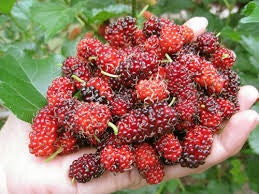
Fruit Appearance: An aggregate fruit, closely resembling a blackberry.
Size: Relatively large for a mulberry, typically 11 to 12 cm long.
Color/Ripening: Starts pale green, turns red, and ripens to a deep, dark purple or nearly black color.
Taste: The ripe fruit is edible, sweet, and juicy, considered to have one of the best flavors among the mulberry species.
Note: Unripe fruit and the milky sap are mildly toxic and should not be consumed.
Ecology and Habitat Native Range: Eastern and central North America, from southern Ontario down to Florida and west to Texas and the Great Plains.
Habitat: Prefers rich, moist, well-drained soils, often found in floodplains, river valleys, and moist hillsides.
Wildlife Value: The abundant fruit is a significant food source for birds, small mammals, and other wildlife.
Always check your state and local regulations for these trees.